
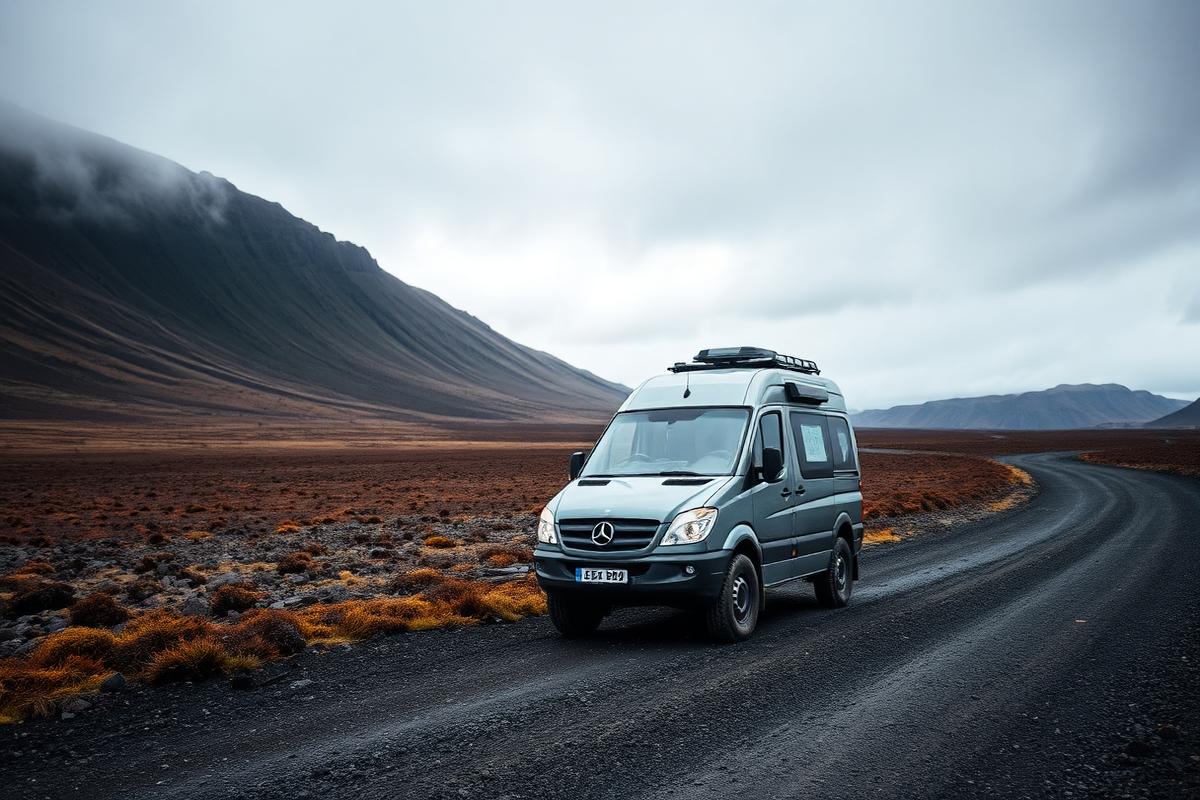

Vehicle, fuel and remote access
The 4×4 camper van, fuel across roughly 14,000 km of highland and coastal driving, recovery equipment and the river-crossing capability needed to reach springs no ordinary vehicle can approach.
- $32,760
- Estimated cost
- 28%
- Of the expedition target
- 3
- Published needs
Why this line exists
Most published hot-spring information is wrong because nobody drove there. A large share of the 123 catalogued springs sit beyond sealed roads, behind unbridged rivers, or at the end of a walk-in from a track that closes for most of the year. Reaching them is the single largest cost of the project, and everything else in the archive depends on it.
When it is spent: Committed before departure (vehicle and insurance) and spent continuously across the field season.
What it produces
- →Physical visits to springs that currently exist only as unverified coordinates
- →Repeat visits where the first attempt was fogged out or the light failed
- →Correct GPS positions recorded on site instead of copied from another website
Inventory manifest
Every item bought, hired or paid for on this line, listed the way a field manifest lists it. Any single item can be sponsored on its own.
Manifest FIELD-ACCESS · Hot Springs expedition
Vehicle, fuel and remote access
Items
19
4×4 camper van hire, ~90 field days
$16,200- HS-FIE-0014×4 camper van hireRiver-capable, sleeps two, 12V power and charging built in90 day$14,850Sponsor this item
- HS-FIE-002Highland F-road surchargeHire-company surcharge for interior highland routes90 day$1,350Sponsor this item
Fuel across ~14,000 km
$8,400- HS-FIE-003Diesel~14,000 km across eight regions plus repeat visits2800 litre$7,280Sponsor this item
- HS-FIE-004Reserve jerry-can fillsCarried fuel for highland legs with no station for 200 km8 fill$1,120Sponsor this item
Insurance, gravel and river-crossing cover
$2,600- HS-FIE-005Gravel, sand and ash protectionExcluded from standard Icelandic hire cover90 day$1,980Sponsor this item
- HS-FIE-006Water-damage and river-crossing rider1 season$620Sponsor this item
Tyres, recovery gear and mechanical contingency
$3,160- HS-FIE-007Spare all-terrain tyres2 ea$680Sponsor this item
- HS-FIE-008Traction boardsSand, ash and snow self-recovery1 pair$260Sponsor this item
- HS-FIE-009Tow strap and shackle set1 set$120Sponsor this item
- HS-FIE-01012V air compressorTyre deflation and reinflation for soft ground1 ea$180Sponsor this item
- HS-FIE-011Hi-lift jack and base plate1 set$220Sponsor this item
- HS-FIE-012Highland breakdown contingencyHeld unspent unless a mechanical failure occurs off sealed road1 reserve$1,700Sponsor this item
Trekking and approach kit
$2,400- HS-FIE-013Expedition packs2 ea$640Sponsor this item
- HS-FIE-014Approach boots2 pair$520Sponsor this item
- HS-FIE-015River-crossing shoes2 pair$180Sponsor this item
- HS-FIE-016Trekking poles2 pair$260Sponsor this item
- HS-FIE-017Dry bags and load carriers8 ea$320Sponsor this item
- HS-FIE-018Head torches and spare cells2 set$280Sponsor this item
- HS-FIE-019Field packing crates4 ea$200Sponsor this item
Prices are current estimates in USD and are reconciled against real invoices once spent. Sponsoring an item credits the sponsor against that line; it never buys an entry, a placement, a rating or a safety finding.
What a sponsor receives
- Named in the vehicle and access credits of the hardcover field record
- Route-leg dispatches naming the sponsor when that leg is driven
- Logo and link on the contributors page and the funding line page
Sponsorship never buys an entry, a placement, a rating or a safety finding. Every credit is disclosed in the book, the archive and on the contributors page.
If this line is only partly funded
Partial funding shortens the route rather than lowering the standard: highland and walk-in springs are cut first, and the affected entries stay marked unverified rather than being published from second-hand sources.
Support in kind instead of cash
- ·Vehicle hire or long-term loan of a river-capable 4×4
- ·Fuel cards or regional fuel accounts
- ·Tyres, recovery equipment, or roadside assistance cover
Questions sponsors ask
Answered the same way we answer them by email.
Why not a normal car?
F-roads legally require 4×4, and several approaches involve unbridged river crossings. A 2WD rental cannot reach roughly a third of the catalogue.
Does the van double as accommodation?
Yes. That is why the vehicle line is large and the lodging line is comparatively small.
Other funding lines
The full hot-spring expedition target of $115,960 is costed across five groups of published needs.
Get the field dispatch
Short updates from the road while the survey is running: springs measured, access won or lost, weather, corrections and what the next leg costs. No selling, and you can leave at any time.
This survey runs on funded mileage.
Sponsors cover getting to sites, permissions and verified documentation. Editorial judgement and safety findings are never for sale.