
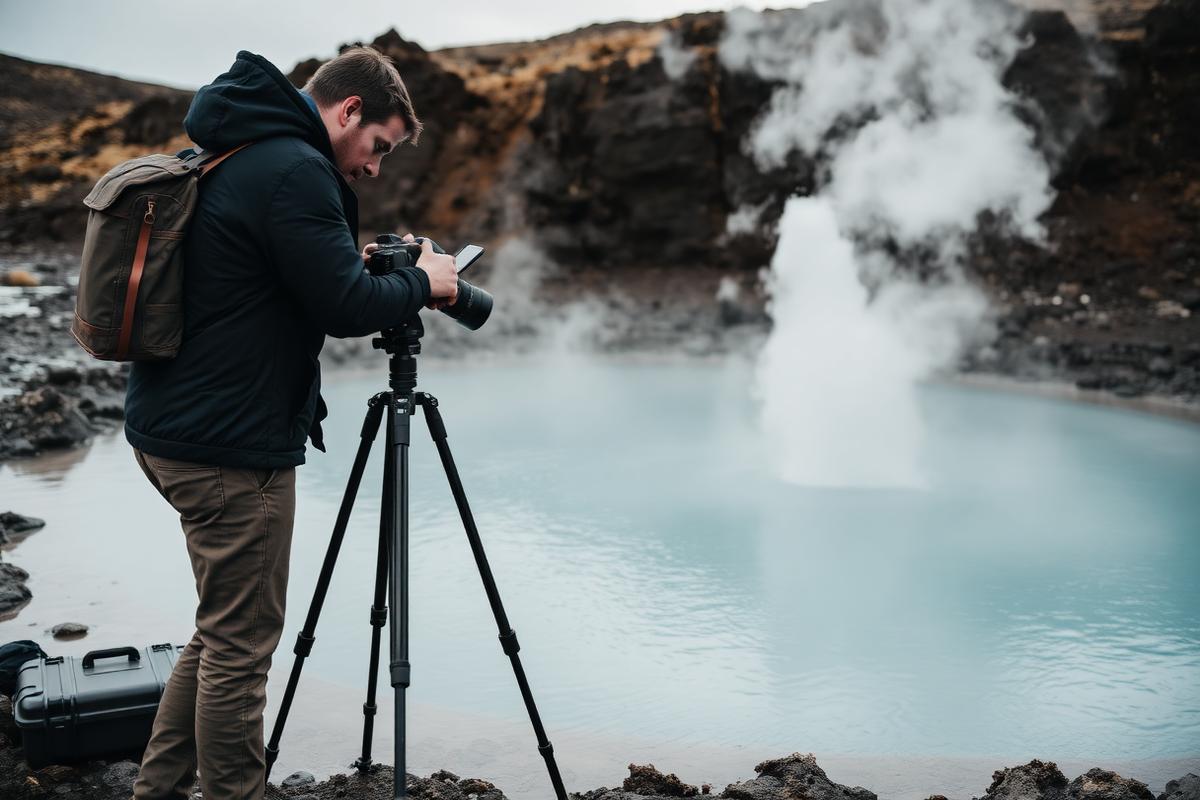

Imaging and Data
Cameras, drone, audio and the redundant storage that makes the archive defensible — every frame, reading and recording that becomes an entry.
- $24,380
- Estimated cost
- 21%
- Of the expedition target
- 2
- Published needs
Why this line exists
The output has to survive scrutiny: a printed book, a guide and a public archive that other people will rely on to decide whether to walk somewhere hot enough to injure them. That means real cameras, a drone for site context, recorded interviews, position and temperature data, and backups made the same day so nothing from a field leg exists on a single disk.
When it is spent: Almost entirely pre-departure procurement, with consumables and data replaced during the season.
What it produces
- →A consistent, high-resolution image set for every documented spring
- →Recorded temperature and position data attached to each entry
- →Interview audio behind the local stories and legends in the book
Inventory manifest
Every item bought, hired or paid for on this line, listed the way a field manifest lists it. Any single item can be sponsored on its own.
Manifest CAPTURE · Hot Springs expedition
Imaging and Data
Items
23
Stills and video bodies with lenses
$11,800- HS-CAP-001Weather-sealed camera bodySecond body is the in-field backup, not a luxury2 ea$5,200Sponsor this item
- HS-CAP-002Wide zoom lens, 16–35 mm1 ea$1,450Sponsor this item
- HS-CAP-003Standard zoom lens, 24–70 mm1 ea$1,900Sponsor this item
- HS-CAP-004Telephoto zoom lens, 70–200 mm1 ea$1,800Sponsor this item
- HS-CAP-005Filter sets, ND and polariser2 set$520Sponsor this item
- HS-CAP-006Carbon tripod and head2 ea$930Sponsor this item
Drone and aerial capability
$4,200- HS-CAP-007Drone airframeSite-context aerials showing approach, scale and hazard geometry1 ea$2,900Sponsor this item
- HS-CAP-008Spare flight batteries4 ea$720Sponsor this item
- HS-CAP-009Propeller and crash spares kit1 kit$180Sponsor this item
- HS-CAP-010Drone insurance and registration1 season$400Sponsor this item
Field audio for interviews
$2,100- HS-CAP-01132-bit float field recorder1 ea$900Sponsor this item
- HS-CAP-012Lavalier microphones2 ea$420Sponsor this item
- HS-CAP-013Shotgun microphone and windshieldIcelandic wind is the main enemy of outdoor interviews1 set$560Sponsor this item
- HS-CAP-014Monitoring headphones and cabling1 set$220Sponsor this item
Redundant storage and same-day backup
$3,900- HS-CAP-015CFexpress and SD cards8 ea$1,280Sponsor this item
- HS-CAP-016Rugged field SSDsTwo mirrored working sets4 ea$1,280Sponsor this item
- HS-CAP-017Offsite archive drives2 ea$840Sponsor this item
- HS-CAP-018Cloud archive, field season1 season$500Sponsor this item
Power, charging and connectivity
$2,380- HS-CAP-019Portable power station1 ea$1,100Sponsor this item
- HS-CAP-020Folding solar panel1 ea$400Sponsor this item
- HS-CAP-021Camera and laptop battery sets6 ea$540Sponsor this item
- HS-CAP-022Icelandic data planDaily publishing from the field3 month$240Sponsor this item
- HS-CAP-02312V inverter and charging hub1 ea$100Sponsor this item
Prices are current estimates in USD and are reconciled against real invoices once spent. Sponsoring an item credits the sponsor against that line; it never buys an entry, a placement, a rating or a safety finding.
What a sponsor receives
- Equipment credit in the book, the archive and every image caption set that used it
- Behind-the-scenes capture footage for the sponsor's own channels, licence agreed in writing
- Logo and link on the contributors page and the funding line page
Sponsorship never buys an entry, a placement, a rating or a safety finding. Every credit is disclosed in the book, the archive and on the contributors page.
If this line is only partly funded
Below full funding the drone and second body go first. The archive still ships, with fewer aerial context frames and no in-field redundancy for a camera failure.
Support in kind instead of cash
- ·Camera bodies, lenses or a drone on loan for the season
- ·Storage media, field drives or cloud backup capacity
- ·Editing, colour or archive infrastructure support
Questions sponsors ask
Answered the same way we answer them by email.
Is any of this resold afterwards?
Durable equipment stays with the project and is used for the waterfall and church expeditions. Sponsors are told which line their money bought.
Who owns the images?
The project. Sponsors receive agreed usage licences; they never receive editorial control.
Other funding lines
The full hot-spring expedition target of $115,960 is costed across five groups of published needs.
Get the field dispatch
Short updates from the road while the survey is running: springs measured, access won or lost, weather, corrections and what the next leg costs. No selling, and you can leave at any time.
This survey runs on funded mileage.
Sponsors cover getting to sites, permissions and verified documentation. Editorial judgement and safety findings are never for sale.