
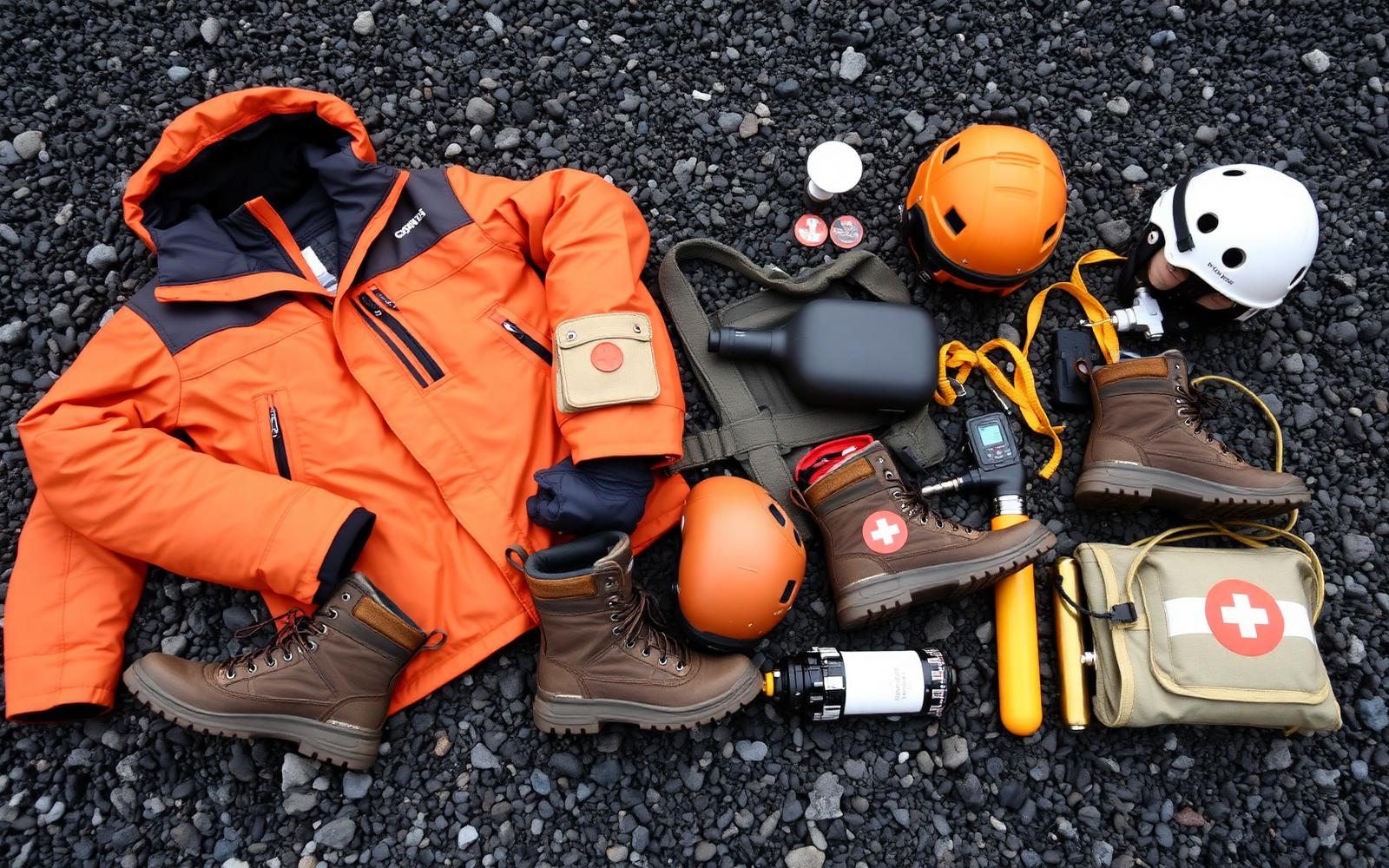

Clothing and Safety Kit
Cold-wet weather clothing, footwear and the measurement, communication and rescue equipment that keeps a two-person team working safely around boiling ground.
- $9,400
- Estimated cost
- 8%
- Of the expedition target
- 1
- Published need
Why this line exists
Geothermal terrain injures people who guess. Crust collapses, water runs above 90 °C, gas pools in hollows, and the weather turns a routine walk-in into an exposure problem within an hour. This line buys the clothing that keeps the team functional in cold rain and wind, and the instruments that turn a hazard into a recorded measurement instead of an opinion.
When it is spent: Procured before departure, with consumables, sensor calibration and satellite airtime replaced through the season.
What it produces
- →Recorded water and ground temperatures for every documented spring
- →Hazard notes in the guide based on instruments, not impressions
- →A team that can keep working through cold, wet and remote legs instead of turning back
Inventory manifest
Every item bought, hired or paid for on this line, listed the way a field manifest lists it. Any single item can be sponsored on its own.
Manifest CLOTHING-SAFETY · Hot Springs expedition
Clothing and Safety Kit
Items
24
Thermal probes, GPS and measurement instruments
$2,200- HS-CLO-001Calibrated thermal probeWater and ground temperatures printed beside each entry2 ea$960Sponsor this item
- HS-CLO-002Infrared surface thermometer2 ea$340Sponsor this item
- HS-CLO-003Handheld GPS unitOn-site positions, never copied coordinates2 ea$800Sponsor this item
- HS-CLO-004Annual calibration certificate1 ea$100Sponsor this item
Satellite communicator and emergency beacon
$1,400- HS-CLO-005Two-way satellite communicator2 ea$840Sponsor this item
- HS-CLO-006Satellite airtime4 month$260Sponsor this item
- HS-CLO-007Personal locator beacon1 ea$300Sponsor this item
Gas detection and hazard marking
$1,200- HS-CLO-008Hydrogen sulphide personal monitorH₂S pools in hollows around vents2 ea$760Sponsor this item
- HS-CLO-009Ground-probe poleTesting crust before a foot goes on it2 ea$240Sponsor this item
- HS-CLO-010Hazard marker flags and tape1 kit$200Sponsor this item
Shell, insulation and base layers, two people
$2,400- HS-CLO-011Hardshell jacketThree-layer waterproof, taped seams2 ea$760Sponsor this item
- HS-CLO-012Hardshell trousers2 ea$460Sponsor this item
- HS-CLO-013Insulated mid layer2 ea$380Sponsor this item
- HS-CLO-014Merino base layer setsTwo per person so one can dry4 set$360Sponsor this item
- HS-CLO-015Waterproof gloves4 pair$220Sponsor this item
- HS-CLO-016Hats, buffs and spare socks1 lot$220Sponsor this item
Boots, crossing footwear and traction
$1,400- HS-CLO-017Hiking boots2 pair$580Sponsor this item
- HS-CLO-018River-crossing shoes2 pair$190Sponsor this item
- HS-CLO-019Gaiters2 pair$140Sponsor this item
- HS-CLO-020Microspikes2 pair$150Sponsor this item
- HS-CLO-021Winter insulated boots2 pair$340Sponsor this item
First aid, burn kit and training
$800- HS-CLO-022Wilderness first-aid kit2 ea$260Sponsor this item
- HS-CLO-023Burn and scald treatment moduleWater above 90 °C is the everyday hazard here2 ea$140Sponsor this item
- HS-CLO-024Wilderness first-aid refresher course2 person$400Sponsor this item
Prices are current estimates in USD and are reconciled against real invoices once spent. Sponsoring an item credits the sponsor against that line; it never buys an entry, a placement, a rating or a safety finding.
What a sponsor receives
- Named in the safety and instrumentation credits of the field record
- Product credit wherever the equipment appears in dispatches, licence agreed in writing
- Logo and link on the contributors page and the funding line page
Sponsorship never buys an entry, a placement, a rating or a safety finding. Every credit is disclosed in the book, the archive and on the contributors page.
If this line is only partly funded
This line is never cut to fund another. If it is underfunded, hazardous approaches are dropped from the route and those springs stay unverified.
Support in kind instead of cash
- ·Technical outerwear, footwear or gloves for two field workers
- ·Satellite communicator hardware or airtime
- ·Thermal probes, gas detection or wilderness first-aid supply
Questions sponsors ask
Answered the same way we answer them by email.
Why is safety a separate funding line?
So it cannot quietly be traded away for another camera. It is costed, published and funded on its own.
Who carries the medical training?
Both field workers hold current wilderness first aid, refreshed before departure and funded from this line.
Other funding lines
The full hot-spring expedition target of $115,960 is costed across five groups of published needs.
Get the field dispatch
Short updates from the road while the survey is running: springs measured, access won or lost, weather, corrections and what the next leg costs. No selling, and you can leave at any time.
This survey runs on funded mileage.
Sponsors cover getting to sites, permissions and verified documentation. Editorial judgement and safety findings are never for sale.