
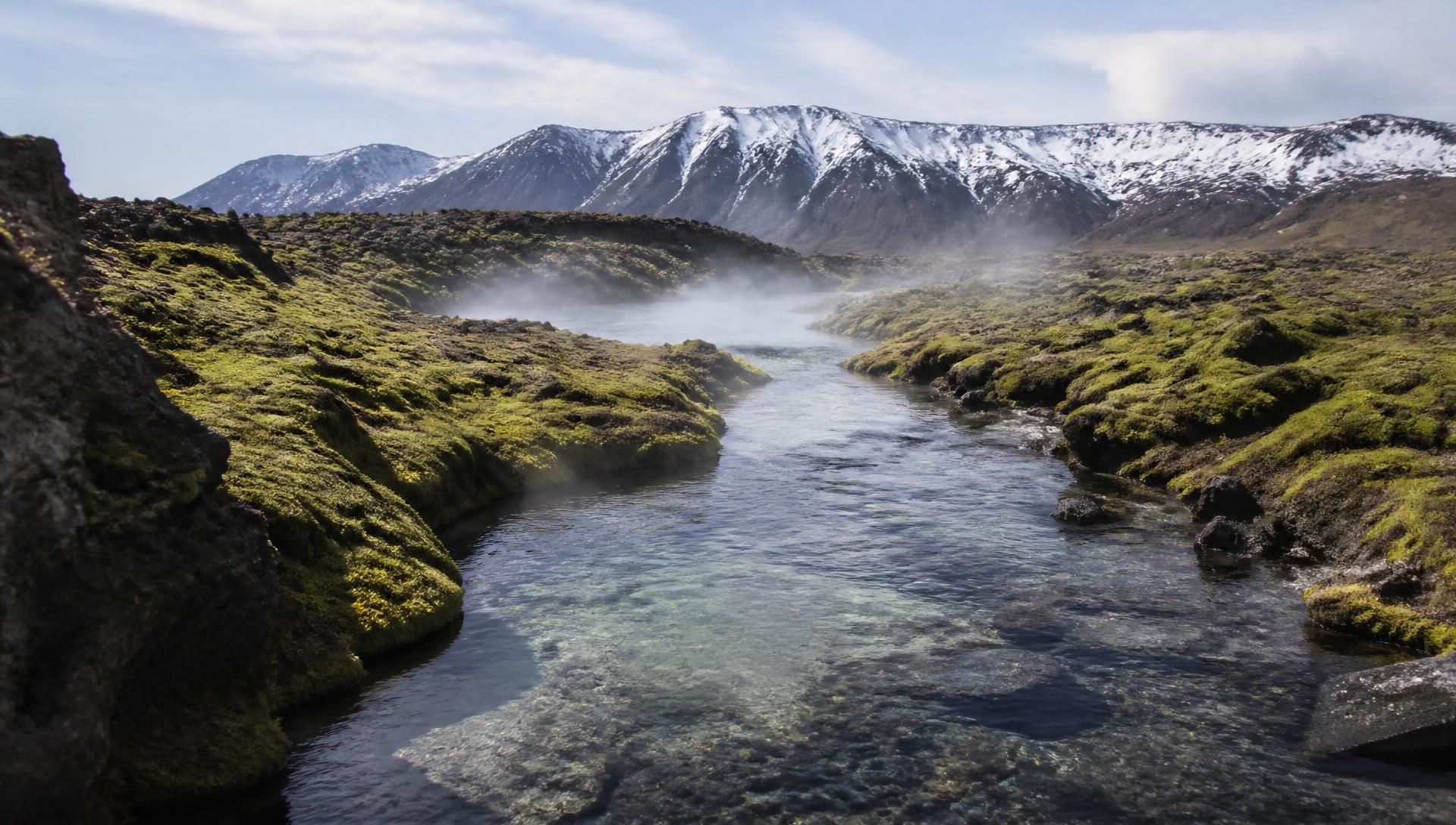

Seasons & access
How the season decides which springs are reachable, what the highland road opening means, and what changes in winter.
- 6 min
- Reading time
- Field-based
- Source
- General
- Location detail
- Reviewed
- Safety content
When to Visit Iceland's Hot Springs: Seasons, Roads and Daylight
Access in Iceland is seasonal before it is anything else. The same spring can be a twenty-minute walk in July and unreachable in February. Planning around that is most of the work of a field survey.
Summer, roughly June to early September
Highland tracks — the F-roads — open progressively through June once the ground has thawed and rivers have dropped, and they close again in autumn. Opening dates are decided each year by the road authority, not by the calendar, and they vary by weeks between seasons.
Summer gives long daylight, the widest access and the highest number of other visitors. For a field programme it is when the remote interior work has to happen.
Shoulder seasons
May and late September keep most of the lowland ring accessible with far fewer people. Weather is less settled, some interior routes are shut, and mountain huts and services begin to close.
This is often the best time for a visitor who wants quiet water at accessible sites.
Winter
Winter bathing is genuinely good — steam, snow and often clear skies — but the set of reachable springs shrinks sharply and the margin for error narrows. Daylight in December is a few hours, roads close at short notice, and a short walk in a whiteout is not short.
Stick to sites with maintained road access and a short walk in, and check road conditions the same morning rather than the night before.
- Check road status and the weather forecast on the day of travel.
- Add a wide time margin around any drive between regions.
- Assume any unpaved track is closed unless confirmed otherwise.
Common questions
- When do the F-roads open in Iceland?
- Most open between mid-June and early July depending on snowmelt and river levels, and close again in September or October. The exact dates are set each year and published by the road authority.
- Can you bathe in hot springs in winter?
- Yes, at sites with maintained access. The water is unaffected by air temperature; the limiting factors are roads, daylight and the walk between the car and the water.
Continue the primer
Types of hot springs
Geothermal rivers, natural pools, hot pots, spouting springs and mud pools — what each one is, how it forms, and which are safe to enter.
Safety
The four things that actually injure people at Icelandic geothermal sites, and the field checks that prevent it.
Etiquette & access
Showering rules, private land, parking, numbers and why several well-known springs have closed to visitors.
Get the field dispatch
Short updates from the road while the survey is running: springs measured, access won or lost, weather, corrections and what the next leg costs. No selling, and you can leave at any time.
This survey runs on funded mileage.
Sponsors cover getting to sites, permissions and verified documentation. Editorial judgement and safety findings are never for sale.