
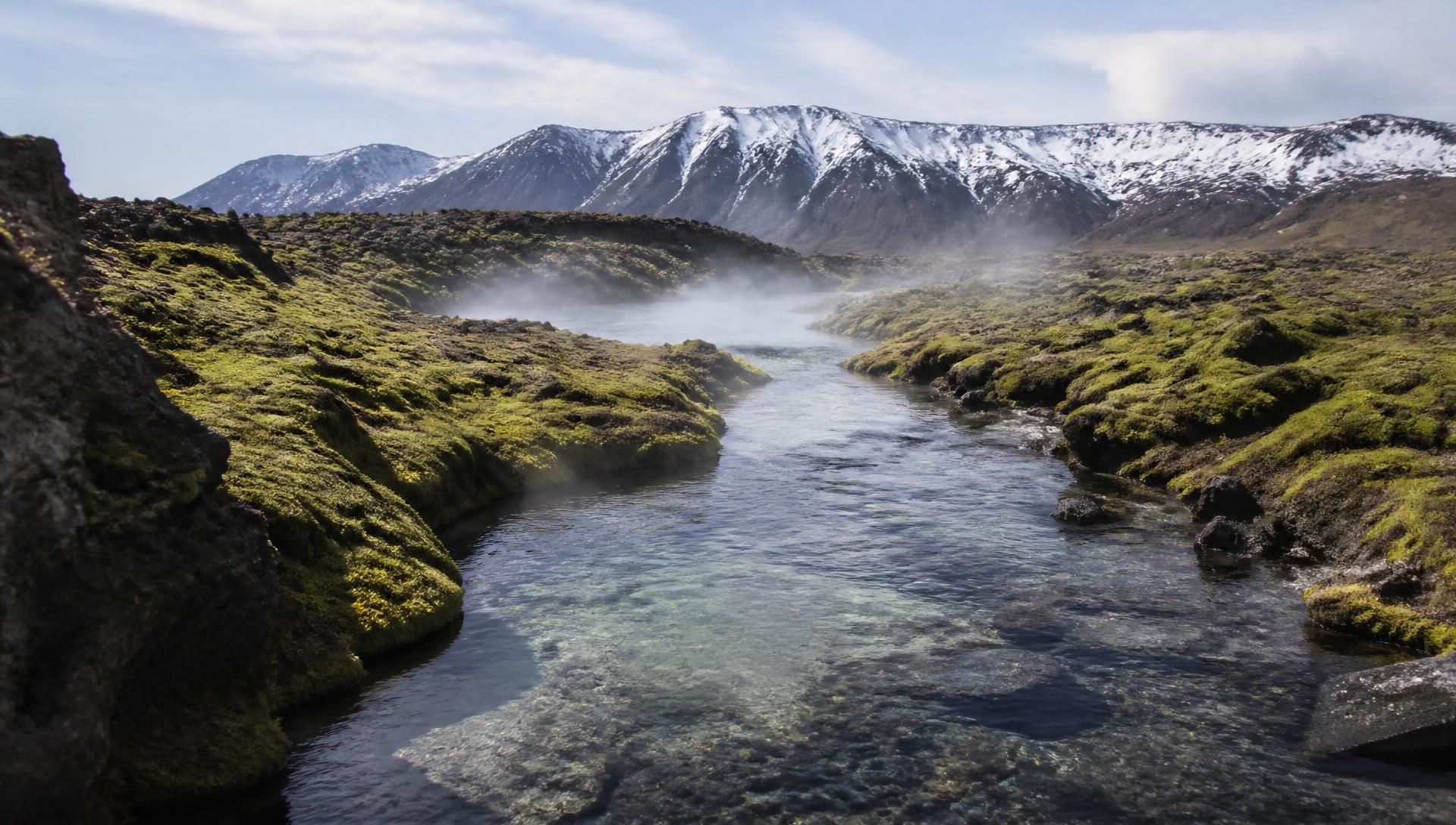

Safety
The four things that actually injure people at Icelandic geothermal sites, and the field checks that prevent it.
- 8 min
- Reading time
- Field-based
- Source
- General
- Location detail
- Reviewed
- Safety content
Hot Spring Safety in Iceland: Temperature, Ground, Weather and Water
Serious incidents at geothermal sites are rarely exotic. They come from four ordinary causes: water hotter than it looks, ground that will not hold, weather that changes the walk out, and water that is not clean. Every entry in our survey is assessed against these four before it is written.
Temperature
Comfortable bathing sits roughly between 38 and 40 °C. Above about 45 °C the water is unpleasant within seconds; near boiling it causes full-thickness burns almost instantly. Geothermal water does not steam predictably, so appearance is a poor guide.
Temperature also stratifies. A pool can be pleasant at the surface and dangerous at the inflow, and the inflow is often at the bottom where you cannot see it. Enter slowly, never jump, and keep a hand on a route out.
Ground
In high-temperature areas the surface can be a thin crust over hot mud. Marked paths exist because the ground beside them has already failed. Off-path walking in these fields is the single most common cause of severe burns.
Around unmanaged pools, look for undercut banks and loose scree above the water. Both fail more easily when wet.
Weather and the walk out
The hazard is usually not the bathe, it is being wet, cold and an hour from the vehicle in changing weather. Icelandic conditions can move from calm to driving sleet within an hour, and rivers rise fast in rain or a warm spell.
Check the national forecast and the road status before setting out, and treat any river crossing on foot or by vehicle as a decision that can be made twice — once out, once back, in worse conditions.
- Carry dry insulating layers in a waterproof bag, not just a towel.
- Plan the exit for the weather at the end of the day, not the start.
- Turn back at the crossing you would not want to repeat.
Water quality
Warm standing water grows things. Untreated pools that are lightly flushed can carry bacteria, and warm freshwater anywhere in the world carries a small risk to the nasal passages, so keep your head above water in unmanaged pools.
Do not bathe with open wounds, do not use soap or shampoo in natural water, and follow the local rule of showering thoroughly before entering any public pool.
Common questions
- What temperature is too hot for a hot spring?
- Anything above about 42 °C is unsafe for extended bathing and above 50 °C causes burns quickly. If you cannot hold a hand in the water comfortably for ten seconds, do not get in.
- Is it safe to bathe alone?
- At remote sites, no. Most geothermal injuries are made worse by delay, and many valleys have no mobile coverage. Go with someone, and leave a plan with a third person.
Continue the primer
Types of hot springs
Geothermal rivers, natural pools, hot pots, spouting springs and mud pools — what each one is, how it forms, and which are safe to enter.
Etiquette & access
Showering rules, private land, parking, numbers and why several well-known springs have closed to visitors.
Seasons & access
How the season decides which springs are reachable, what the highland road opening means, and what changes in winter.
Get the field dispatch
Short updates from the road while the survey is running: springs measured, access won or lost, weather, corrections and what the next leg costs. No selling, and you can leave at any time.
This survey runs on funded mileage.
Sponsors cover getting to sites, permissions and verified documentation. Editorial judgement and safety findings are never for sale.