

How they form
The plate boundary, the mantle plume and the groundwater cycle that give a country this size an extraordinary density of geothermal features.
- 6 min
- Reading time
- Field-based
- Source
- General
- Location detail
- Reviewed
- Safety content
Why Iceland Has So Many Hot Springs
Iceland's geothermal wealth is not luck. It is the direct product of sitting on a spreading plate boundary above a persistent mantle upwelling, with abundant rainfall and permeable young rock.
A spreading ridge above a hot spot
The Mid-Atlantic Ridge runs through Iceland, separating the North American and Eurasian plates. Along it, the crust is thin, young and fractured, and magma sits unusually close to the surface. Beneath that, a mantle plume supplies extra heat — which is why Iceland stands above sea level at all while the rest of the ridge does not.
Water in, water out
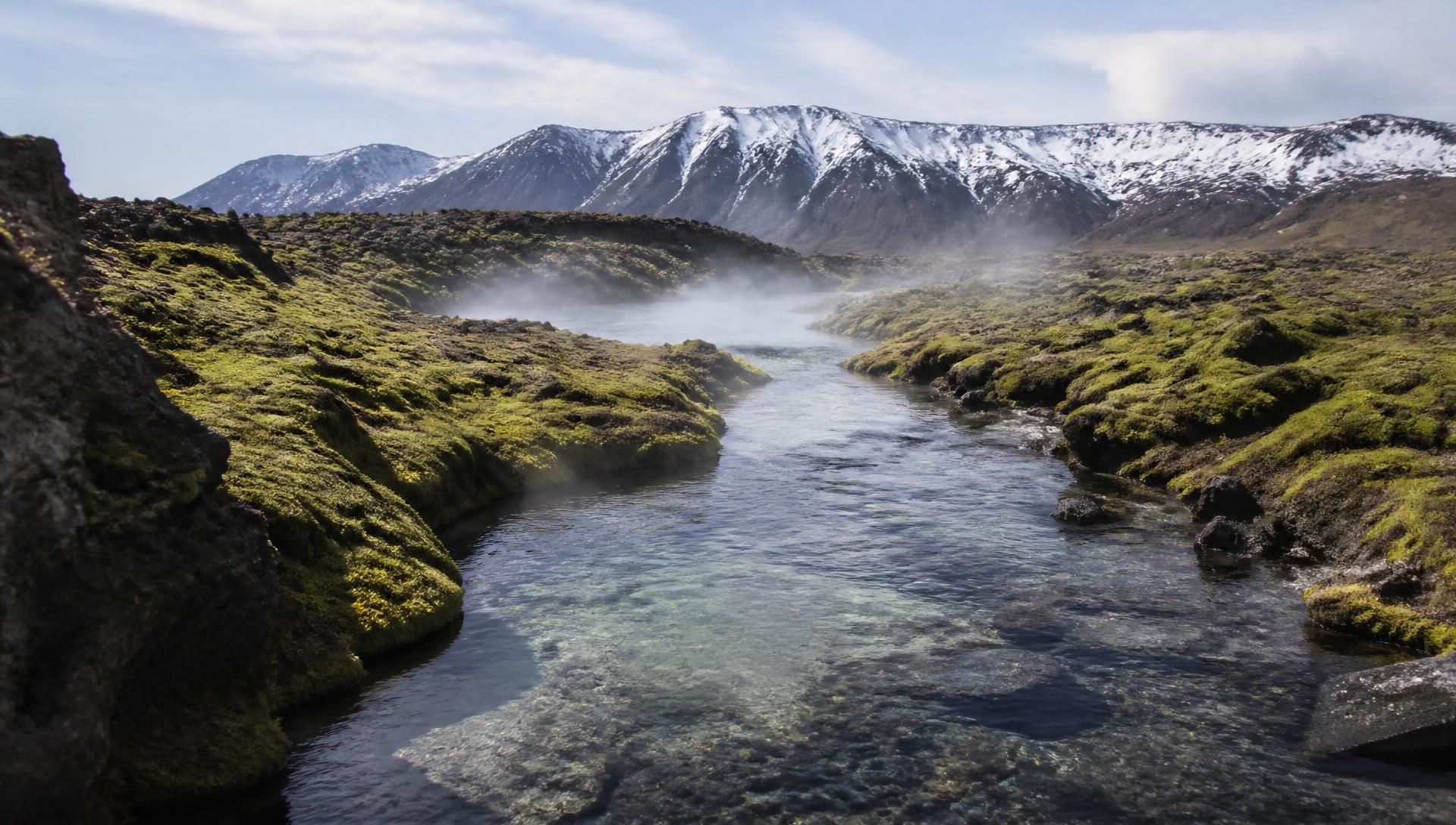
Rain and meltwater sink through porous lava, are heated at depth, become buoyant and rise again along fractures. Where that rising water reaches the surface it produces a spring; where it flashes to steam it produces a fumarole or a spouting spring.
The chemistry of what emerges tells you which system it came from. Low-temperature systems in older rock give clear, mildly mineralised water that is pleasant to bathe in. High-temperature systems in active volcanic zones give acidic, sulphurous water and steam — spectacular, and not for bathing.
What that means on the ground
Practically, the bathable springs cluster where low-temperature systems meet accessible valleys, while the dramatic, photogenic geothermal fields are usually the ones you must stay out of. A survey that follows the geology rather than the photographs ends up with a very different map from a social feed.
Iceland also uses this heat at national scale: most buildings are heated geothermally, and a substantial share of electricity is generated from it. Bathing is the visible tip of an energy system.
Common questions
- How many hot springs are there in Iceland?
- There is no single authoritative count. Estimates run to several hundred distinct geothermal areas and many thousands of individual springs and vents, only a small fraction of which are safe or permitted to bathe in. Producing a verified count for bathable springs is one aim of this survey.
- Is Icelandic geothermal water safe to drink?
- No. Hot tap water in Iceland is often geothermal and smells of sulphur; drink the cold water instead, which is excellent. Never drink from a spring.
Continue the primer
Types of hot springs
Geothermal rivers, natural pools, hot pots, spouting springs and mud pools — what each one is, how it forms, and which are safe to enter.
Safety
The four things that actually injure people at Icelandic geothermal sites, and the field checks that prevent it.
Etiquette & access
Showering rules, private land, parking, numbers and why several well-known springs have closed to visitors.
Get the field dispatch
Short updates from the road while the survey is running: springs measured, access won or lost, weather, corrections and what the next leg costs. No selling, and you can leave at any time.
This survey runs on funded mileage.
Sponsors cover getting to sites, permissions and verified documentation. Editorial judgement and safety findings are never for sale.